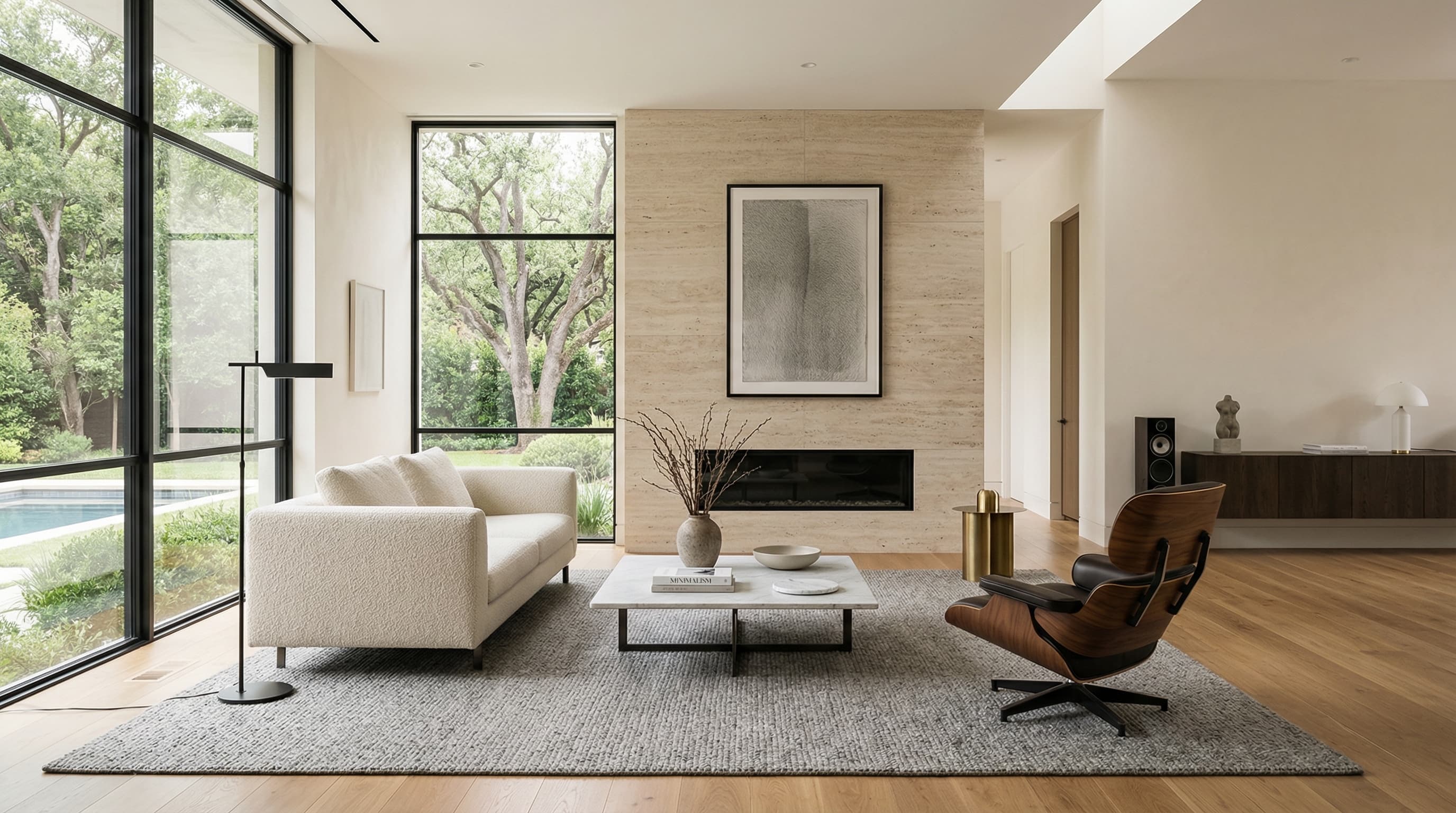
What Minimalism Is Not
Minimalism has been misunderstood — reduced to a visual style, a Pinterest aesthetic of white walls and bare shelves. But real minimalism is not about owning fewer things. It is about making every thing deliberate.
A minimalist room can contain warmth. It can contain color, texture, memory, life. What it cannot contain is noise — the visual noise of objects that have no reason to be there, furniture chosen by default, decoration that fills space without earning it.
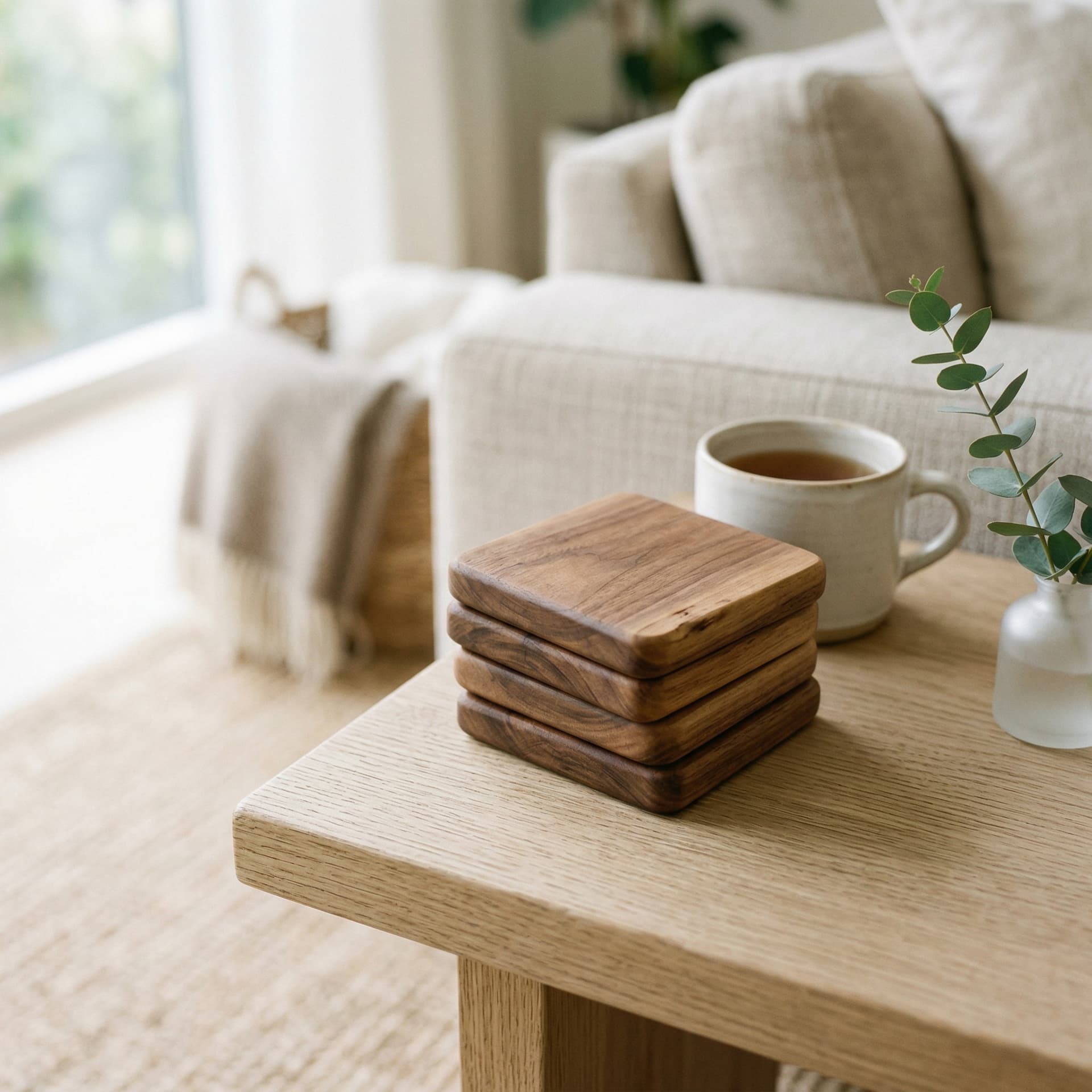
The Edit Is the Design
The most important skill in minimalist design is not what you add. It is what you remove. Every object that leaves a room makes the remaining objects more powerful. The chair that stays becomes the chair — not one of several, but the one, chosen, positioned, seen.
This is why minimalism is harder to design than maximalism. Addition is easy. Subtraction requires conviction. You have to be certain enough in what remains to let everything else go.
| Stays | Pieces with defined function, durable materials, right proportion |
| Goes | Objects with no reason to be there, duplicates, filler decoration |
| Criterion | Each object must earn its place — not merely occupy it |
| Result | Each remaining piece becomes more powerful through the absence of the others |
✦Expert tip
Before editing a space, remove everything. Reintroduce only what is missed. What was not sought after probably did not belong.
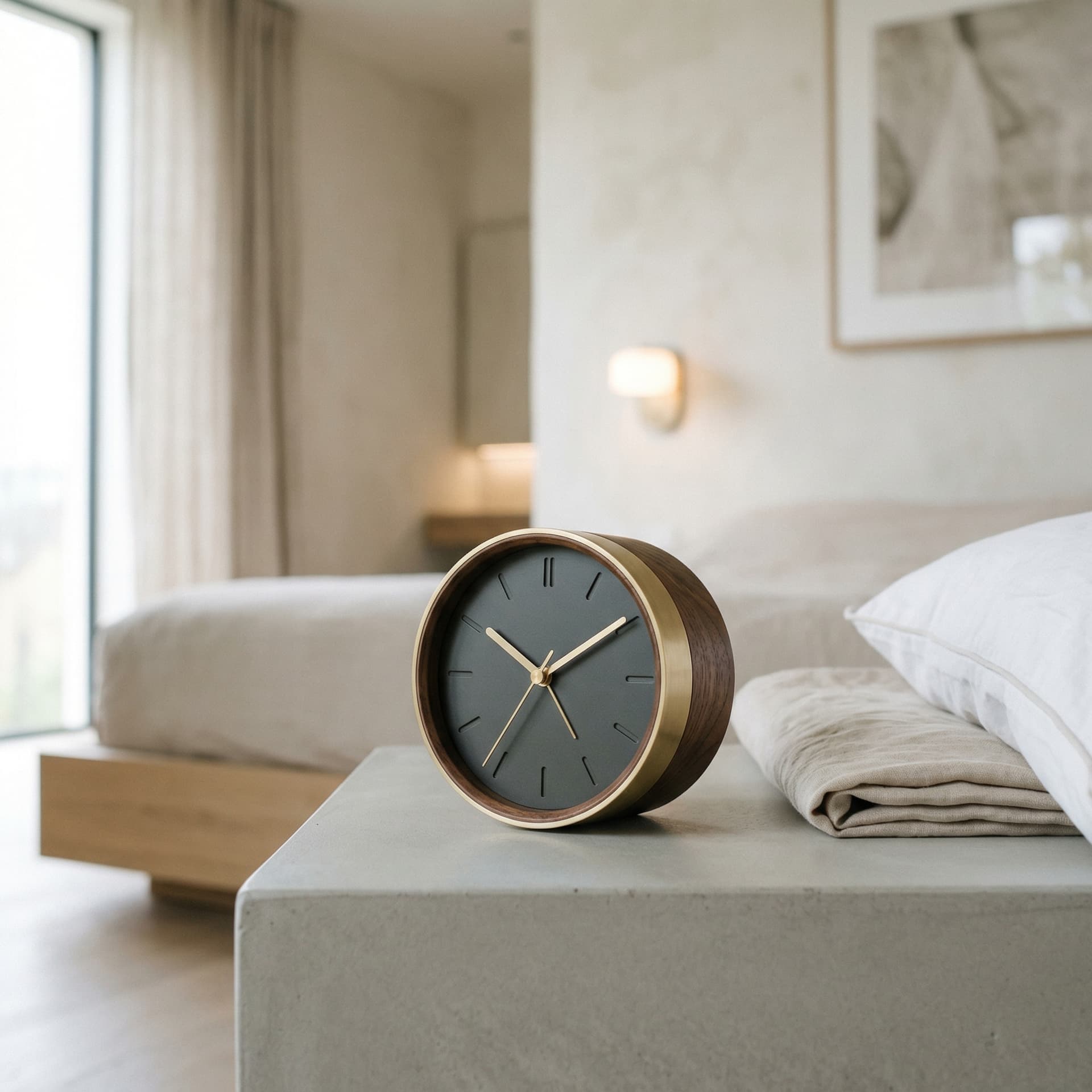
The Emotional Weight of Objects
Objects carry weight — not physical, but emotional. A cluttered room is exhausting not because it is ugly, but because it asks something of you constantly. Your eye moves. Your mind makes small decisions. You register things, half-register things, avoid things.
A minimalist room rests you. It holds only what deserves your attention. The result is not coldness — it is clarity. The psychological freedom of a space that does not demand.
Minimalism as Commitment
The difficulty with minimalism is that it does not end at the design phase. It requires maintenance — a different relationship with objects, with purchasing, with accumulation. A minimalist interior designed without this understanding will not stay minimal.
But when the philosophy is genuinely embraced, something shifts. You begin to choose differently. You buy less, but better. You notice more. The home becomes a reflection of what actually matters — not what filled a space, but what was chosen to be there.
A minimalist home is not a statement of restraint. It is a statement of clarity — about what you value, how you want to live, what you want to feel when you walk through your own door. That clarity is worth designing for.
Carol Orofino Design creates minimalist interiors that are warm, considered, and deeply personal. If simplicity is your form of luxury, let us design it together.