The Architecture of Silence
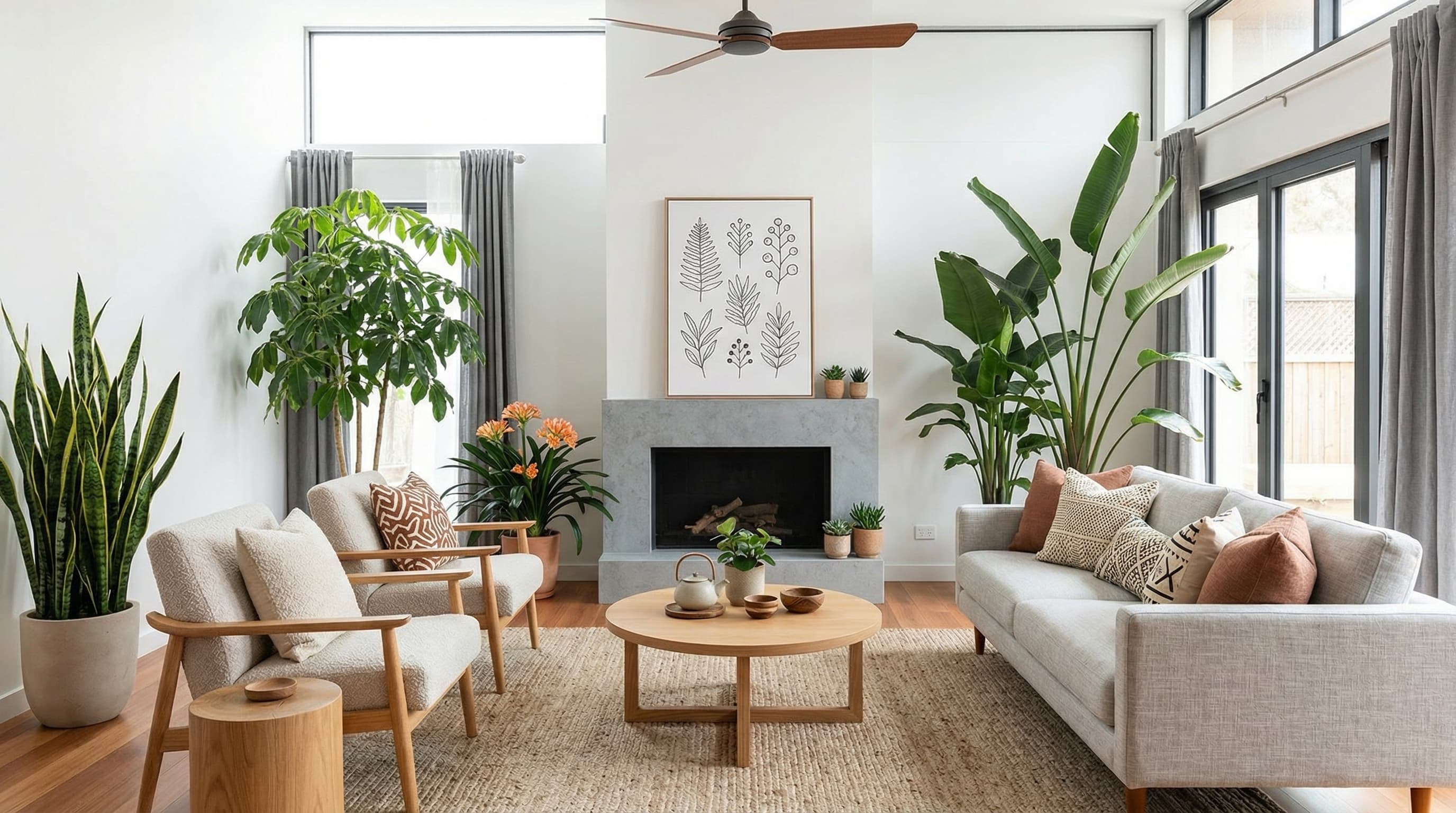
Scandinavian design understands what most interiors forget — that the most powerful element in a room is the space between objects. An armchair in pale oak, positioned before a flood of northern light. A single linen curtain, translucent as a morning in Bergen, filtering warmth without interrupting it. These are not decorative choices. They are declarations.
Luxury, in this context, is not measured in quantity. It is measured in intention. Every piece earns its place. Every texture — the grain of light ash wood, the weave of undyed linen, the quiet certainty of brushed stone — tells a story that does not need to be told twice.
Texture as Biography
Run your hand across the surfaces of a well-designed Scandinavian interior and you will understand things that words cannot carry. The warmth of natural oak: wood that has grown slowly, that has taken on color and character through decades of Nordic light. The slight resistance of linen, woven with a looseness that breathes. The cool, absolute stillness of pale limestone underfoot.
These textures are not accents. They are the narrative. In a palette drawn from the earth itself — ivory, warm sand, the gray of still water, the brown of aged bark — each material becomes a word in a sentence that reads: this home was built with patience.
| Light oak | Warm base — ages gracefully and deepens in tone with use |
| Raw linen | Lightweight and breathable — ideal for curtains, upholstery, bedding |
| Pale limestone | Coolness and solidity — the visual anchor of Scandinavian spaces |
| Natural wool | Tactile warmth without visual weight — throws, cushions, rugs |
| Handmade ceramic | Imperfection as quality — each piece is unique and irreplaceable |
✦Expert tip
In Scandinavian design, textures do not decorate — they narrate. When combining materials, prioritize tactile contrast: smooth with rough, cool with warm, opaque with translucent.
The Luxury of Less
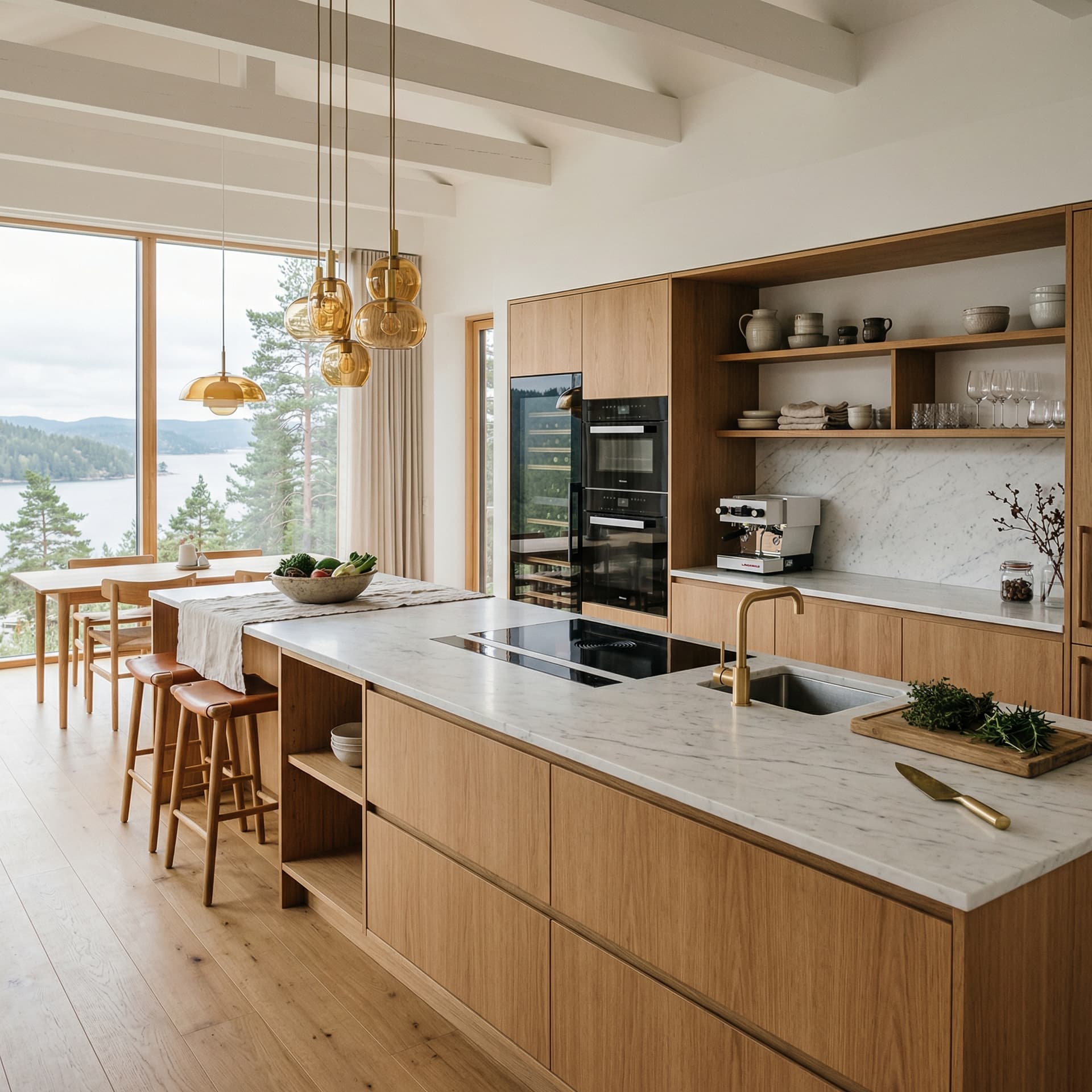
There is a misconception that minimalism withholds. In truth, the most refined minimalist interiors give you everything — by refusing to take anything away from what matters.
Clean lines do not mean cold. A room of whites and warm beige, with a single accent in caramel leather or brushed bronze, can hold more sensory richness than ten rooms filled with ornament. The eye rests. The mind quiets. The body understands it has arrived somewhere worth staying.
This is the paradox at the heart of luxury minimalism: the less the room speaks, the more you hear.
Light as the Most Expensive Material
No designer can purchase what the North gives freely — that particular quality of Scandinavian light: low, angular, generous. It travels across a room like a slow conversation, touching the texture of a wool throw, the edge of a ceramic vase, the pale grain of an unfinished wall.
Light is never incidental. Sheer linen curtains are chosen not merely to soften a window, but to choreograph how light enters a room across the hours of a day. Furniture is positioned not for convention, but for the way morning light will fall. Natural light, in this philosophy, is not a supplement — it is the design itself.
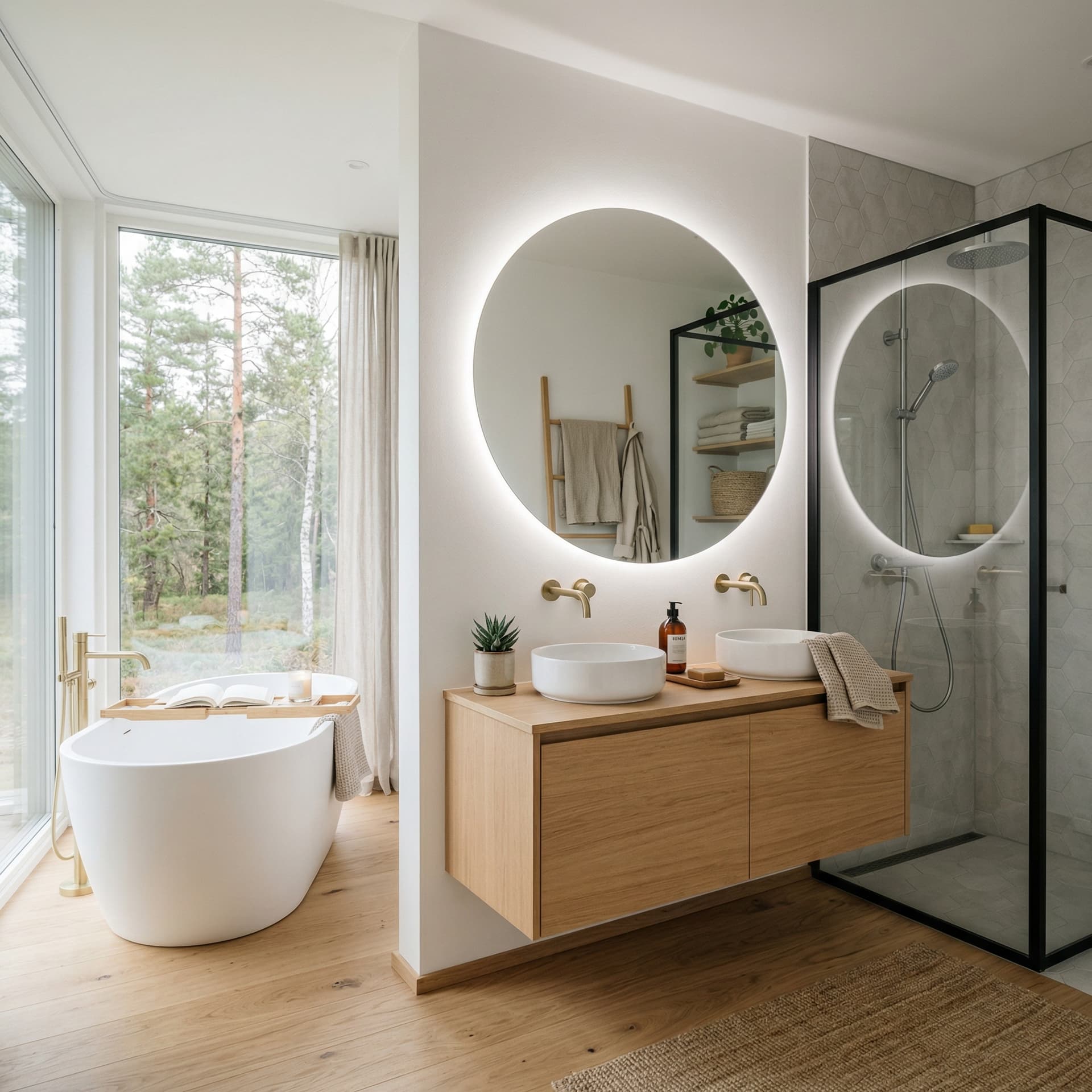
To live inside a space conceived in this language is to understand that simplicity, when pursued with absolute rigor, becomes its own form of extravagance. If you have felt that something is missing from your interior — and cannot quite name it — perhaps what is missing is exactly that: less.
Carol Orofino Design translates this philosophy into spaces that live and breathe with you. For clients seeking interiors where calm is a deliberate luxury, we invite you to begin a conversation.